
RTP Explained: What the Percentage Means for Players
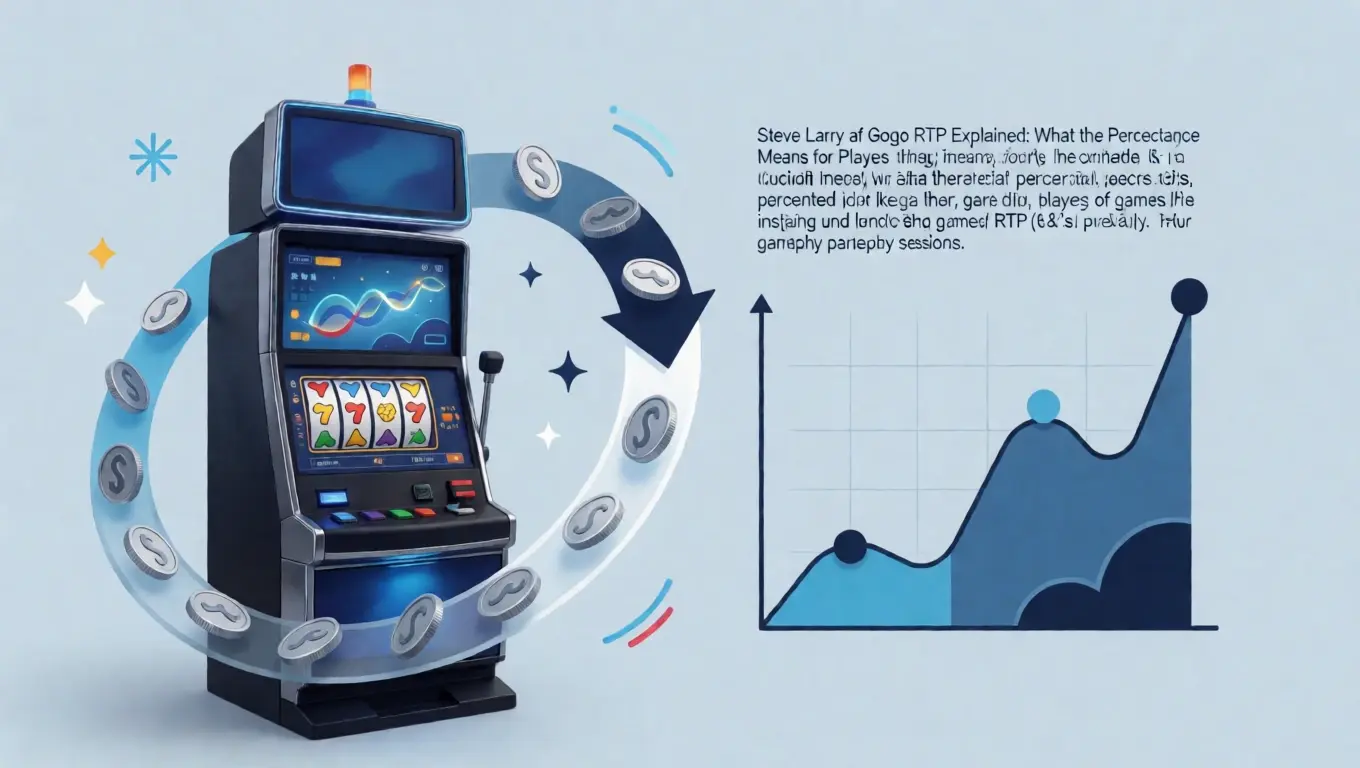
Understand Return to Player (RTP) percentages in online slots and how they indicate the theoretical payout over millions of game rounds. This guide explains how RTP is calculated, what it means for your gameplay, and how to find this crucial information.
What you need to know
RTP is a long-run theoretical return measure; it does not predict or guarantee the result of an individual spin or session. It helps players understand a game's long-term generosity, but it does not predict short-term outcomes for any single session.
Numbers with an explanation
This value is calculated over millions of game rounds and represents the game's long-term payout design.
Most online slots fall within this range, with higher percentages generally considered more favorable for long-term theoretical returns.
If a game has 96% RTP, the house edge is 4%, representing the casino's theoretical long-term profit.
How to interpret this
RTP is a fundamental concept in online slot gaming, representing the statistical expectation of returns over an extremely large number of game rounds. It's a measure of a game's design, not a prediction of immediate results. While a higher RTP suggests a better theoretical payout over time, individual sessions can and will vary significantly due to the random nature of slot machines.
₱1,000 Theoretical Wager Example
- Total wagered: ₱10 × 100 spins = ₱1,000.
- Long-run theoretical return: ₱1,000 × 92% = ₱920.
- Theoretical house edge: ₱1,000 − ₱920 = ₱80 (8%).
Result: From ₱1,000 wagered, the long-run theoretical return is about ₱920 and the theoretical house edge is about ₱80.
The 92% RTP is an illustrative teaching value, not a claim about a specific game. ₱920 is a long-run theoretical return, not a prediction that a player will receive ₱920 after 100 spins. Individual sessions can vary widely.
RTP vs. Volatility
| Factor | RTP (Return to Player) | Volatility (Variance) | What it means |
|---|---|---|---|
| What it measures | Theoretical long-term payout percentage | Frequency and size of payouts | RTP tells you the game's overall generosity over time, while volatility describes how often and how much you might win in a session. |
| Impact on session | Does not predict short-term outcomes | Influences win frequency and potential for big wins | A high RTP doesn't mean you'll win often, but high volatility means fewer wins, potentially larger; low volatility means more frequent, smaller wins. |
| Player preference | Favored by players seeking better theoretical returns over extended play | Favored by players who prefer either frequent small wins (low) or less frequent big wins (high) | Players choose games based on whether they prioritize long-term theoretical return (RTP) or their preferred style of win frequency and size (volatility). |
Return to Player (RTP) is a crucial metric for online slot players, representing the theoretical percentage of all wagered money a slot machine will pay back to players over time. It's expressed as a percentage, for example, 96%, and is calculated over millions of spins, not individual sessions. Understanding RTP helps players make informed decisions about which games to play, as it provides an indication of a game's long-term generosity.
What is Return to Player (RTP)?
RTP stands for Return to Player. It is a theoretical statistical calculation that shows the percentage of all money wagered on a slot game that is paid back to players as winnings over an extended period. For instance, a game with a 96% RTP means that for every 100 units wagered, the game is designed to return 96 units to players over its lifetime. It's important to remember that this is an average calculated over millions of spins, not a guarantee for any single play session or individual player.
How RTP is Calculated and Verified
RTP is determined by the game's mathematical model and probability of outcomes. Game developers design slots with specific payout structures, and the RTP is a result of these probabilities. Independent testing agencies then verify these calculations to ensure fairness and accuracy. These agencies simulate millions, or even billions, of game rounds to confirm that the actual payouts align with the theoretical RTP. This rigorous testing ensures that the advertised RTP is reliable and reflects the game's long-term performance.
RTP vs. Volatility: Understanding the Difference
While RTP indicates the long-term payout percentage, volatility (or variance) describes the frequency and size of payouts. A high RTP game can still have high volatility, meaning it might pay out less frequently but with larger wins, or low volatility, meaning more frequent but smaller wins. For example, two games might both have 96% RTP, but one might offer many small wins (low volatility), while the other offers fewer, larger wins (high volatility). Players often choose games based on their preference for either frequent small payouts or less frequent large payouts, in addition to RTP.
What RTP Means for Your Gameplay
For players, RTP is a guide to a game's potential long-term returns. A higher RTP generally suggests a game is theoretically more generous over time. However, it does not predict short-term outcomes. During any given session, a player might experience wins or losses that deviate significantly from the RTP. This is due to the inherent randomness of slot machines. Over many thousands of spins, the game's actual payout will converge towards its theoretical RTP. Players looking for better theoretical returns over extended play often seek out games with higher RTPs, typically above 96%.
How to Find a Game's RTP
Most reputable online casinos and game developers provide the RTP for their slot games. This information is typically found within the game's information section, often accessible through an 'i' icon, a question mark symbol, or a menu button within the game interface. It may also be listed on the game developer's official website or in the casino's game descriptions. Game specifications and RTP can vary by version or market; verify the current provider/operator information.
Pros
- Provides an indicator of a game's long-term theoretical payout
- Helps players compare the theoretical generosity of different slots
- Verified by independent testing agencies for fairness
Cons
- Does not guarantee short-term results for individual sessions
- Can vary by game version or market
- Does not account for volatility or hit frequency
FAQ
Does a high RTP mean I will win more often?
Not necessarily. RTP indicates the percentage of money returned over millions of spins, not the frequency of wins. A game's volatility determines how often it pays out and the size of those payouts.
Is RTP the same as house edge?
RTP and house edge are related but represent different perspectives. RTP is the percentage returned to the player, while the house edge is the percentage retained by the casino. If a game has a 96% RTP, its house edge is 4% (100% – 96%).
Can RTP change for a game?
Yes, RTP can sometimes vary by jurisdiction or casino operator. Game developers may release different versions of the same game with varying RTP settings. Always check the specific game information at your chosen casino.
Should I only play games with high RTP?
While higher RTP generally means better theoretical returns over the long term, it's not the only factor. Volatility, bonus features, and personal preference for gameplay style also play a significant role in a player's enjoyment and experience.
Common mistakes and better choices
RTP is a long-term average; volatility dictates win frequency and size. A high RTP game can still have high volatility and infrequent big wins.
RTP is calculated over millions of spins. Your individual session results will likely deviate significantly from the theoretical RTP due to randomness.
While themes are fun, RTP provides crucial information about a game's theoretical payout. Factor it into your game selection alongside other features.
Games connected to this topic

1 Reel Majestic Wild Buffalo
Spinomenal
- RTP
- 88.85%
- Volatility
- —
- Max Win
- —
Book of Dead
Play'n GO
- RTP
- 96.24%
- Volatility
- —
- Max Win
- 5,000x

Max Win Machine
Hacksaw Gaming
- RTP
- 96.22%
- Volatility
- High
- Max Win
- —
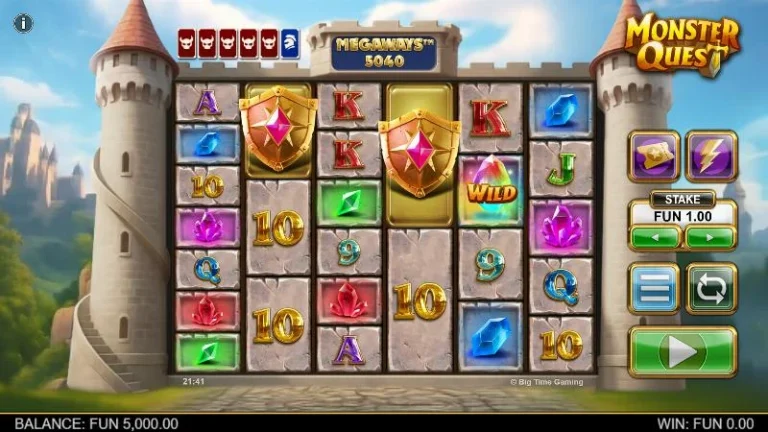
Monster Quest
Big Time Gaming
- RTP
- 96.58%
- Volatility
- High
- Max Win
- 99,900x
Offers relevant to the next step



Related Guides
 Gates of Olympus Strategy Guide: Bankroll Planning and Session ManagementUpdated Aug 25, 2026
 Monster Quest RTP Explained: What the Percentage Means for PlayersUpdated Aug 25, 2026
 Max Win Machine Volatility Guide: Risk Level, Win Frequency and Bankroll FitUpdated Aug 25, 2026
 Gates of Olympus 1000 RTP Explained: What the Percentage Means for PlayersUpdated Aug 25, 2026
 Max Win Machine RTP Explained: What the Percentage Means for PlayersUpdated Aug 25, 2026
 Gates of Olympus 1000 Volatility Guide: Risk Level, Win Frequency and Bankroll FitUpdated Aug 25, 2026